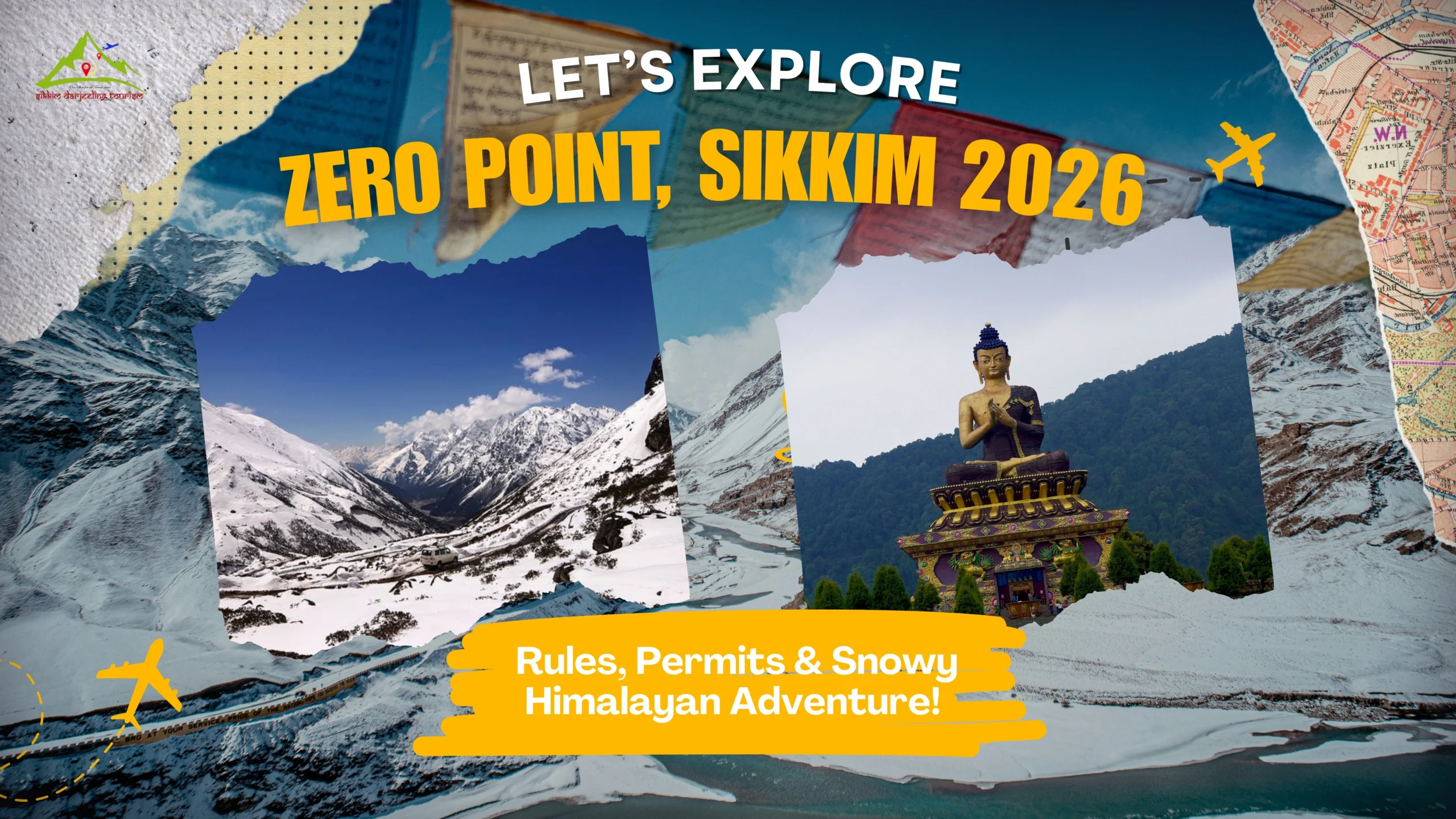
If you’re dreaming of a high-altitude Himalayan escape, Zero Point Sikkim is one of those places that feels unreal until you’re actually standing there, snow crunching under your boots, icy wind brushing your face, and mountains stretching endlessly in every direction. As of 2026, a few things have changed. This guide walks you through the latest rules, permits, road realities, and the best time to visit, without the confusion.
Also Explore…Tiger Hill Sunrise Guide: Why It’s the Most Loved Attraction in Darjeeling?
Where Exactly Is Zero Point Sikkim?
Zero Point Sikkim, locally called Yumesamdong, sits about 23 km from Lachung in North Sikkim at an altitude of roughly 15,300 ft. It’s the last civilian-accessible point near the Indo–China border. Hence the name Zero Point. Beyond this, only the army goes further. This is raw, dramatic geography: wide valleys, frozen rivers, and snow that often stays year-round.
What’s New in 2026? (Rules You Should Know)
Travel to Zero Point has always been regulated and rightly so. In 2026, authorities are focusing even more on safety, the environment, and crowd control.
Updated Travel Rules
- Still restricted: You cannot travel alone, only with registered tour operators.
- Daily vehicle limits from Lachung to reduce traffic and pollution.
- Weather-based cutoffs: Access closes immediately during heavy snowfall or landslides.
- No overnight stay allowed at Zero Point (only day visits from Lachung).
Tip: Last-minute plans don’t work well here. Pre-booking is essential.
Zero Point Sikkim Permit Update (2026)
You’ll need a special Protected Area Permit (PAP) in addition to the regular North Sikkim permit.
Permit Essentials:
- Issued only through authorized Sikkim tour operators.
- Valid government photo ID (Aadhar, Passport, Voter ID).
- For foreigners: Passport and Indian Visa.
- Authorities usually process permits a day in advance, depending on weather and army clearance.
- Permit applications are now being digitized. You get QR-coded permits on your phone post-approval.
- There are stricter controls on visitors in certain sensitive zones to reduce environmental impact.
- For foreigners: solo travelers may face restrictions. Group travel or going with a registered tour operator is strongly recommended.
Important tip: Always travel via a registered operator. Many local taxis or package quotes exclude the extra permit/vehicle charges (for example, some charge a special vehicle-permit fee just for Zero Point).
Good to know: Permits can be cancelled without notice if weather or road safety becomes an issue. Always keep a buffer day in your itinerary.
When to Visit: Best Months and Seasonal Advice
Timing makes a huge difference to your experience at Zero Point. Here’s a seasonal breakdown to help you plan:
- April-Early May: Widely considered the best time to visit. Rhododendrons bloom on the way, the skies are often clear, and you get a mix of snow and spring flowers.
- October-November (Autumn): Another good window, clearer skies, mild weather, and decent snow coverage. Great for those who want panoramic Himalayan views without the deep winter chill.
- June-September (Monsoon): It is risky to travel in this season. The region can experience heavy rainfall, landslides, and slippery roads, not ideal for travel.
- December–February (Winter): Zero Point remains fully snow-covered, offering a magical experience for snow lovers. However, heavy snowfall can make roads risky, limit visibility, and restrict access. If you go, plan carefully and check the local weather and permit status.
Pro tip: If you want the classic snow, mountain view, and flower route, aim for April–May. For snow-heavy, winter adventure. November–February, but only if you are prepared for cold, unpredictable conditions and possible permit/road delays.
Travel & Safety Tips for 2026 Trips to Zero Point
- Start early: Many guides recommend leaving from Lachung early in the morning. Morning hours often offer better visibility, a must for snowy, high-altitude terrain.
- Adjust and carry warm gear: Altitude is high, carry woolens, layers, gloves, sunglasses (for slow glare), and basic medicines.
- Bring cash and plan logistics carefully: ATMs may not be available in remote stretches; some charges (like extra vehicle fare) may be payable locally.
- Respect rules, especially in this border-adjacent zone: No off-road driving beyond designated civil boundaries, avoid restricted areas, follow local guide instructions.
- Book permits early (especially in peak season): With the new digital permit system and possibly tighter visitor caps, slots can fill up plan.
Planning a Zero Point Trip? Choose Tripjyada
If you want a well-managed, safe, and memorable North Sikkim experience, book your Sikkim tour package with Sikkim Darjeeling Tourism and explore the Himalayas the right way, safe, smooth, and beautifully planned. We managed all required permits, experienced drivers, comfortable vehicles, Lachung stay arrangements, and 24/7 trip assistance. Also, explore Tripjyada to explore more Himalayan adventures.
Also Explore…Explore Mechuka, Arunachal Pradesh: The Hidden Himalayan Paradise You Must Visit