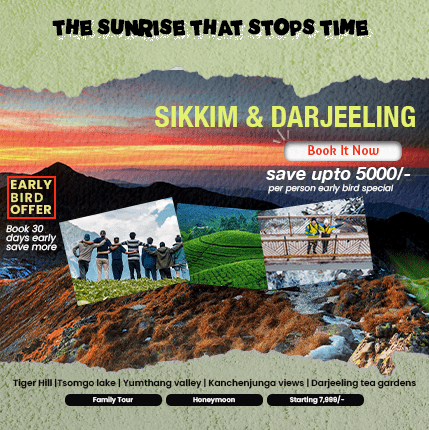
Gangtok, the capital of Sikkim, is a serene and enchanting destination. It is a hill city that feels alive in every season. Framed by the mighty Himalayas and blessed with ever-changing landscapes, Gangtok offers everything, from snow-covered mountains in winter to rhododendron-covered hills in spring and lively local festivals throughout the year. But the experience of Gangtok changes beautifully with the best time to visit in Gangtok. The weather in Gangtok, road conditions, sightseeing opportunities, and even mountain views vary month by month. So, choosing the best time to visit Gangtok depends on what you want from your trip. Clear Kanchenjunga views, pleasant sightseeing weather, snowfall, or quiet off-season charm.
Gangtok in Spring (March to April)
Spring is when Gangtok truly comes alive. As winter slowly fades, the city is wrapped in fresh mountain air, blooming flowers, and crystal-clear skies. With temperatures ranging between 10 degrees and 20 degrees, spring offers the most comfortable weather to explore Gangtok without feeling rushed or tired. This is the best time to visit Gangtok for sightseeing and photography. The hillsides burst into color with rhododendrons, orchids, and magnolias, while views of Mount Kanchenjunga appear sharp and magical, especially during early mornings.
Gangtok in Summer (May to June)
Unlike the plains, summer in Gangtok remains pleasantly cool, making it a favorite escape for travelers looking to beat the heat. Temperatures usually stay between 15 degrees and 25 degrees, offering a refreshing break from the scorching summers of cities like Delhi and Kolkata. Summer is the best time to visit Gangtok for families and adventure seekers. Roads are in excellent condition, and high-altitude attractions such as Tsomgo Lake, Baba Mandir, and Nathula Pass are more accessible during this time.
Gangtok in Winter (December to February)
Winter turns Gangtok into a calm, winter wonderland hill town. The air feels crisp and mornings are beautifully clear making it an ideal time for travellers who love quiet streets, slow travel, and winter landscapes. During this season, temperatures in Gangtok usually range between 4 degrees and 12 degrees, with nights occasionally dropping close to freezing. While snowfall in Gangtok town is rare, higher-altitude destinations come alive with snow. Places like Tsomgo Lake and Nathula Pass often receive fresh snowfall. A festive and cosy atmosphere, especially around Christmas and New Year, when Gangtok lights up with decorations and celebrations.
Gangtok in Monsoon (July to September)
The monsoon season in Gangtok turns the city into a breathtaking green wonderland. From July to September, the hills come alive with fresh rain-washed forests, floating clouds, and roaring waterfalls cascading down the mountains. However, monsoon travel in Gangtok comes with its own set of challenges. Heavy rainfall can cause slippery mountain roads, occasional landslides, and travel delays, especially on routes connecting Gangtok with North Sikkim and Nathula Pass.
In conclusion, Gangtok is a destination that shines in every season, but choosing the right time can truly elevate your experience. For the best weather, clear mountain views, and comfortable sightseeing, March to June and October to November are the most ideal months to visit. Whether you’re drawn by blooming flowers, crisp Himalayan views, festive charm, or peaceful winter vibes