Cherrapunji is the kind of place where looking at the weather forecast is almost pointless. If the clouds are not above you, they are probably close at hand, getting ready to come in. Cherrapunji is one of the most captivating destinations of Meghalaya, famous for its dramatic cliffs, waterfalls, caves, living root bridges, and extraordinary rainfall.
Cherrapunji, or the official name Sohra, is in the East Khasi Hills and is a beautiful blend of nature, adventure, local culture, and slow mountain experiences. From watching waterfalls tumble into misty valleys to walking across centuries-old root bridges, there is so much to discover here.
Planning a weekend getaway or adding Sohra to a longer Meghalaya itinerary? This Cherrapunji guide has all you need to know, including the best time to visit, how to get there, things to do, where to stay, food, and practical travel tips.
Where Is Cherrapunji?
Cherrapunji, or Sohra, is located in Meghalaya in the North-east of India, about 50-55 km from Shillong. The journey between the two takes around 1.5 to 2.5 hours, depending on the traffic, weather, and road conditions.
For travellers planning Cherrapunji from Shillong, the road journey is particularly scenic, with winding mountain roads, forests, villages, and viewpoints along the way.
The town lies on a plateau surrounded by deep valleys and forested hills. One of the reasons that the landscape is so dramatic is its location.
Cherrapunji is famous for its heavy monsoon rains in particular. It has recorded some of the highest rainfall amounts ever recorded, although nearby Mawsynram is often cited as the wettest place on Earth based on long-term average annual rainfall.
And yes, the umbrella is required.
Best season to visit Cherrapunji
When you go really depends on what you want out of the trip.
Somewhat better conditions for sightseeing, with greenery and the pleasantness of March to May. As the landscape wakes up after winter, waterfalls start to get more impressive.
Monsoon season is June-September. This is where Cherrapunji lives up to its reputation. Waterfalls are at their peak, clouds race across the hills, and the land becomes lush and green.
Heavy rain can also make trails slippery, reduce visibility, disrupt roads, and create occasional travel delays.
October to November is another good time. The rain begins to subside, the scenery remains lush, and outdoor activities are more enjoyable.
December to February is cooler and relatively dry. The waterfalls may not be in their monsoon flow, but clearer skies can provide beautiful views of the valley.
Quick Seasonal Guide
|
Season |
What to Expect |
Best for |
|
March–May |
Pleasant and increasingly green |
Sightseeing, hiking |
|
June–September |
Heavy rain and powerful waterfalls |
Monsoon scenery |
|
October–November |
Green, cooler and clearer |
Trekking, sightseeing |
|
December–February |
Cool and relatively dry |
Views, relaxed trips |
How to Get to Cherrapunji
The easiest way to reach Cherrapunji is via Shillong, which is the main entry point for most of the visitors to Meghalaya.
Air Travel
The closest major airport is Lokpriya Gopinath Bordoloi International Airport in Guwahati, Assam. From Guwahati, you can proceed by taxi or other road transport to Shillong, and then onward to Cherrapunji.
Guwahati is usually more practical for travellers flying in as Shillong Airport has limited connectivity.
Railway
The nearest major railway station is Guwahati. It is well connected with many Indian cities.
Travellers coming from Guwahati can hire a taxi or jump on road transport to Shillong and then to Sohra.
On the road
One of the best ways to explore Meghalaya is by road. Taxis are common and many tourists prefer to hire a private vehicle for their entire trip around Meghalaya.
The road from Shillong to Cherrapunji is scenic, with mountain roads, viewpoints, forests, and villages along the way. For travellers planning a shillong cherrapunji trip, this road journey is an experience in itself rather than simply a way of getting from one destination to another.
Top Places to Visit in Cherrapunji
Cherrapunji is full of waterfalls, caves, viewpoints, forests, and strange natural attractions. You could easily spend a few days exploring the area.
- Nohkalikai Falls
Nohkalikai Falls is one of the most famous places to visit in Cherrapunji and one of the highest plunge waterfalls in India.
Water tumbles over the plateau and down into a blue-green pool below. Monsoon is the time when the waterfall is most powerful.
The view is superb, although clouds and mist can sometimes take over the scenery.
- Falls of Seven Sisters
Also called Nohsngithiang Falls, the seven sisters falls cherrapunjee meghalaya is a spectacular waterfall that tumbles dramatically over the limestone cliffs of the East Khasi Hills.
The waterfall is named for the seven segmented streams that cascade down the cliffs.
It is particularly spectacular during the rainy season when the surrounding hills are at their greenest and the falls at their most voluminous.
- Mawsmai Cave
If squeezing through narrow rocky passages sounds like your kind of entertainment, Mawsmai Cave should be on your itinerary.
The limestone cave contains naturally formed passages, rock formations and chambers. Some sections are so narrow you might wish you’d left the extra-large backpack at home.
It is one of the more accessible caves in the area and a popular stop for first-time visitors.
- Cave of Arwah
Arwah Cave has a different atmosphere for those who want a more adventurous cave experience.
A short trek through a forested area can take you to the cave. Inside, you can see limestone formations and fossils in the rock
The surrounding area still feels more natural than some over-developed tourist sites.
- Waterfalls of Wei Sawdong
The Wei Sawdong Falls is now a popular site because of its beautifully layered look. Water cascades down a number of levels, with dense vegetation all around.
The viewpoint is a particularly photogenic vantage point, though conditions can be slippery in rainy weather.
Wear the proper boots, not the fashionable shoes that have never been on a muddy trail.
- Falls of Dainthlen
Another spectacular waterfall near Sohra is Dainthlen Falls that is also associated with Khasi folklore.
Local legend says that the waterfall is connected with a great serpent named Thlen. The story adds a cultural dimension to an already impressive natural attraction.
The falls are set in rugged terrain and are especially attractive during the monsoon.
- Living Root Bridge, Nongriat
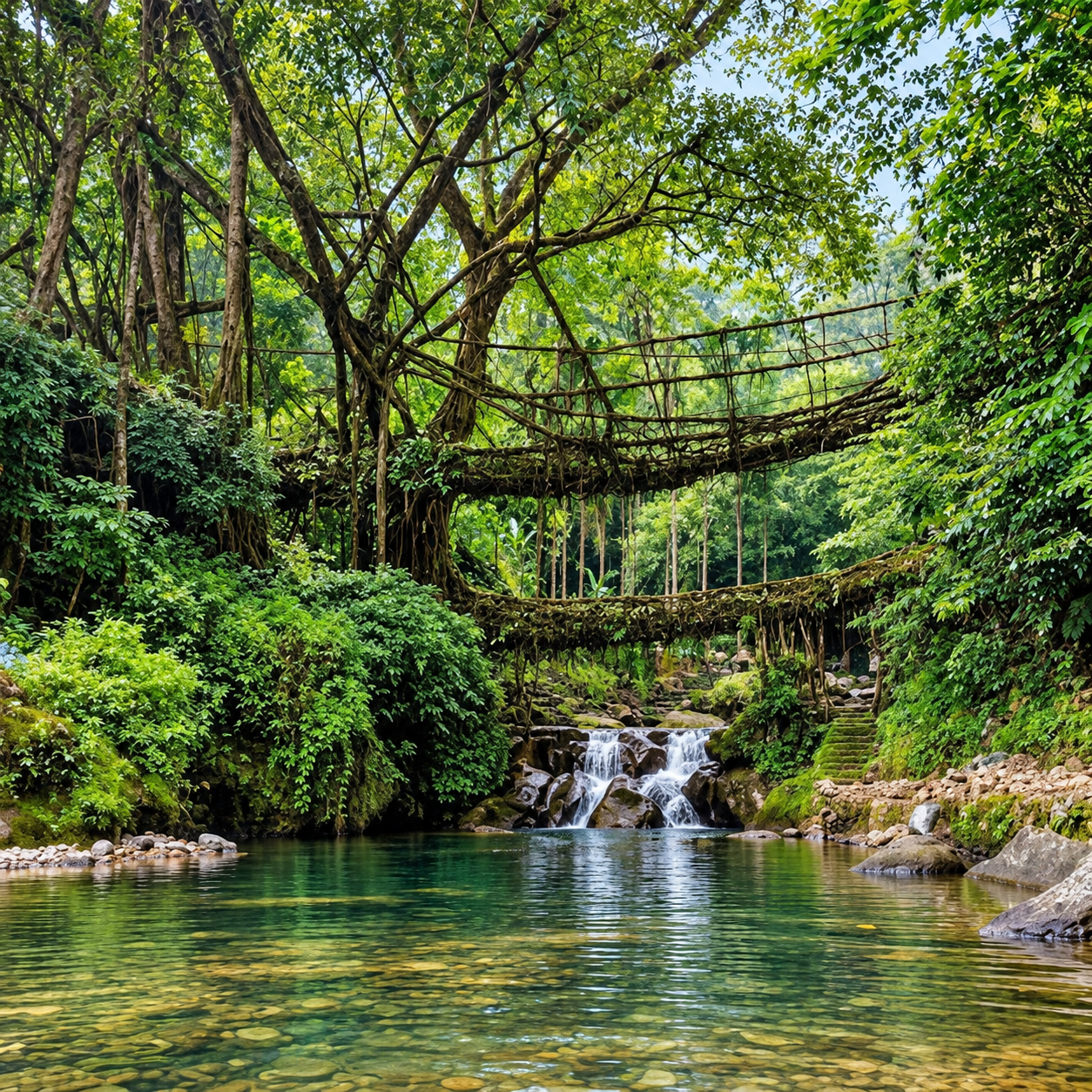
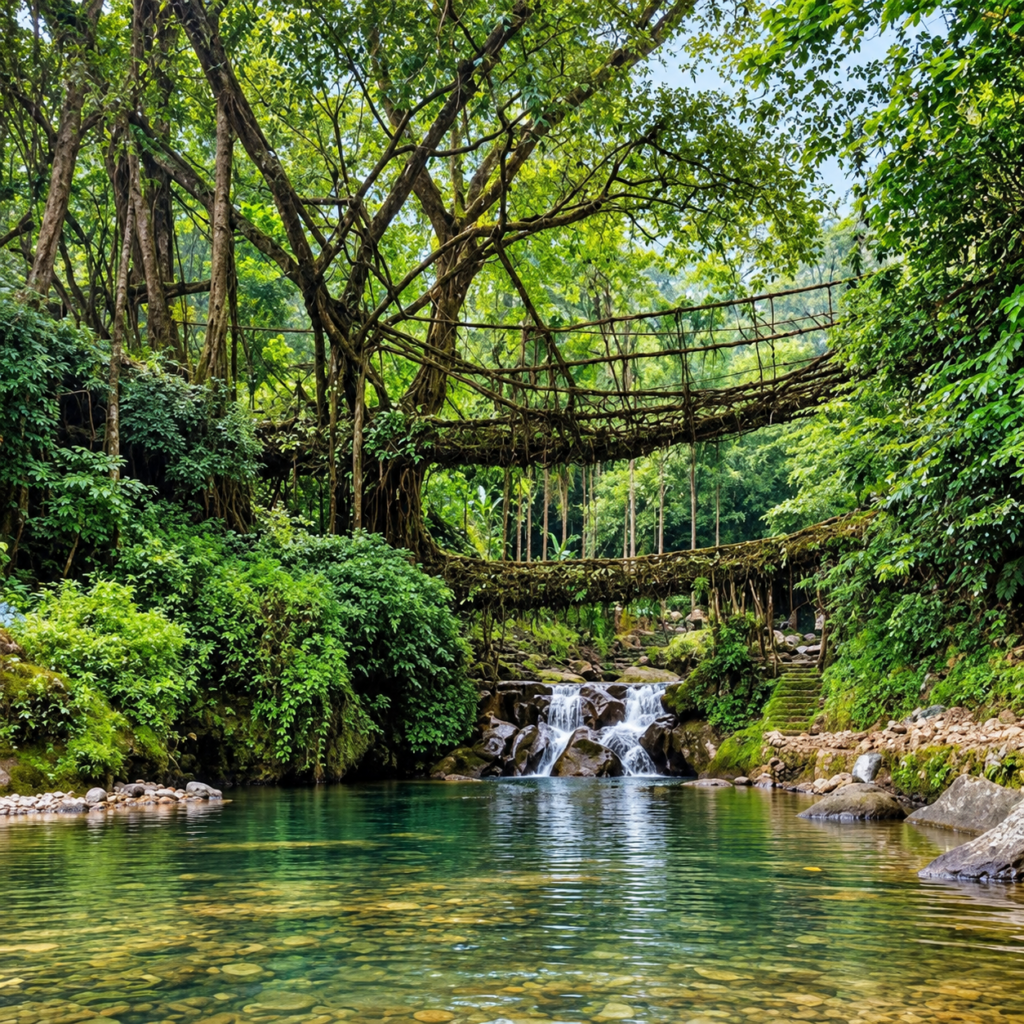
Visiting the famous living root bridges is one of the most unforgettable things to do around Cherrapunji.
The Double-Decker Living Root Bridge at Nongriat is constructed from the aerial roots of rubber fig trees that have been shaped and guided by local communities over generations.
You have a long trek ahead of you to Nongriat with hundreds of steps. It’s not exactly a walk in the park, but for the avid hiker, the experience is worth the effort.
Bring water, start early, and leave some energy for the trip back.
- Rainbow Falls
Even better, if you go beyond the living root bridge to Rainbow Falls, the trek is even more rewarding.
If the sun hits the falling water at the right angle, you can get a rainbow across the waterfall. Of course, there’s no guarantee; the weather is the boss here.
This is a tough trek, so give yourself plenty of time and don’t rush.
What to do in Cherrapunj
Cherrapunji isn’t just about driving from one waterfall to the next.
- Waterfall Hunting
You can spend a whole day exploring waterfalls around Sohra. Some of the popular ones are Nohkalikai, Seven Sisters, Dainthlen and Wei Sawdong.
In monsoon, the landscape can appear almost cinematic.
- Trek to the Living Root Bridge
The living root bridges are a must-see for the active traveller. The trek goes through forest trails, steep steps, streams and traditional village scenery.
Start early and take enough water, as the journey back can be tiring.
- Discover the Caves
Meghalaya is known for its large network of limestone caves. Mawsmai is a good starting point for beginners; other caves and routes of exploration might require more preparation or local assistance.
Unless you know the caves you are entering and have the right gear and guidance, don’t go into them.
Enjoy the Viewpoints:
- The views from the dramatic cliffs at Cherrapunji are spectacular over the valleys and distant hills.
- Sometimes you see crystal-clear views. You may see clouds sometimes.
- Both are part of the Sohra experience.
Local Food to Tast
A trip to Meghalaya is incomplete without tasting some Khasi flavours.
Look out for dishes like jadoh (rice and meat dish), dohneiihong (pork cooked with black sesame) and doh khleh (a traditional pork salad).
Vegetarian travellers will be able to feast on rice, vegetables, dal, noodles and other familiar dishes.
Try local preparations when possible for snacks; don’t stick to the usual tourist menu completely. Food preferences are different in restaurants, so it is always sensible to check the ingredients.
Best Places to Stay in Cherrapunji
Cherrapunji offers a range of accommodation options including hotels, resorts, guesthouses and homestays.
Staying near the main Sohra area makes sightseeing more convenient, especially if you plan to visit several attractions in one day.
If you want a more local experience, Homestays are a great option. They may offer you a chance to try Khasi home-cooked food and learn more about communities in the neighbourhood.
If you plan to visit during peak times or the monsoon, it is advisable to book accommodation in advance.
How many days is enough for Cherrapunji?
A good time frame is two to three days for a first visit.
Day 1
Visit the major attractions like Nohkalikai Falls, Seven Sisters Falls, Mawsmai Cave, and Dainthlen Falls.
Day 2
Spend your day on the trek of Nongriat Living Root Bridge and, if conditions allow, proceed to Rainbow Falls.
Day 3
Keep the day free for more waterfalls, viewpoints, local villages, or any attractions you didn’t get to see earlier.
If you are combining Cherrapunji with Shillong, Dawki, Mawlynnong or other Meghalaya destinations, you can customise the itinerary as per your requirement.
Cherrapunji Travel Guide
- Rain protection: The weather can change quickly, even outside the peak monsoon months.
- Wear appropriate footwear. Trails and steps can get very slippery after rain.
- Begin early: Early starts work well for trekking and popular attractions.
- Cash is king: Smaller shops and local vendors may not always accept digital payments.
- Respect local communities: Do not litter, follow local rules, and be mindful when visiting villages and sacred or culturally significant places.
- Don’t rush the itinerary: the weather in the mountains can change suddenly. Better a late journey than a dangerous journey.
Check conditions before you hike: Heavy rain can affect trails, streams, and roads. Check with local guides or officials before you go for current conditions.
Cherrapunji – Is It Worth Visiting?
Sure. Cherrapunji is not a place you tick off waterfalls on a list. The real charm is the combination of dramatic landscapes, Khasi culture, dense forests, caves, rain-fed streams, and amazing living root bridges.
The weather can be unpredictable, the roads can be winding, and your shoes may never recover from the mud. But that’s part of the adventure.
Cherrapunji is a destination that needs to be on the Meghalaya itinerary for travellers who love nature, trekking, photography, and places that seem really different from India’s usual hill stations.
A Journey Worth Taking
Cherrapunji, the wild side of Meghalaya, is in focus. From the thundering Nohkalikai Falls & Misty Cliffs of Sohra to the surreal living root bridges of Nongriat, every part of the region has a different story to tell.
Plan for the weather, build in an extra buffer for unforeseen delays, and make sure you have enough time to explore and not just rush from point to point.
And remember, in Cherrapunji, when they say it might rain, they are not forecasting. They are suggesting a very reasonable thing. So, take an umbrella.
What is Cherrapunji famous for?
Cherrapunji, also known as Sohra, is famous for heavy rainfall, dramatic waterfalls, limestone caves, green valleys and living root bridges. It is one of Meghalaya’s most popular nature and adventure destinations.
Which are the best places to visit in Cherrapunji?
The top attractions include Nohkalikai Falls, Seven Sisters Falls, Mawsmai Cave, Arwah Cave, Wei Sawdong Falls, Dainthlen Falls, Nongriat Double-Decker Living Root Bridge and Rainbow Falls.
How many days are enough for a Cherrapunji trip?
Two to three days are suitable for exploring Cherrapunji. Two days can cover the major waterfalls, caves and the Nongriat trek, while a third day allows time for viewpoints, villages and additional attractions.
What is the best time to visit Cherrapunji?
March to May is suitable for pleasant sightseeing and hiking. June to September brings heavy rainfall and powerful waterfalls, while October and November offer greener landscapes with more comfortable outdoor conditions. December to February is cooler and relatively dry.
How difficult is the Nongriat Living Root Bridge trek?
The Nongriat trek involves hundreds of steps, forest trails, streams and steep sections. It requires reasonable fitness, comfortable trekking shoes, drinking water and sufficient time for the return journey. The Rainbow Falls extension is more demanding.
How can travellers reach Cherrapunji?
Most travellers reach Cherrapunji by road from Shillong. Guwahati Airport and Guwahati Railway Station are the main entry points, followed by a road journey through Shillong to Sohra. The drive usually takes around 1.5 to 2.5 hours from Shillong, depending on conditions.