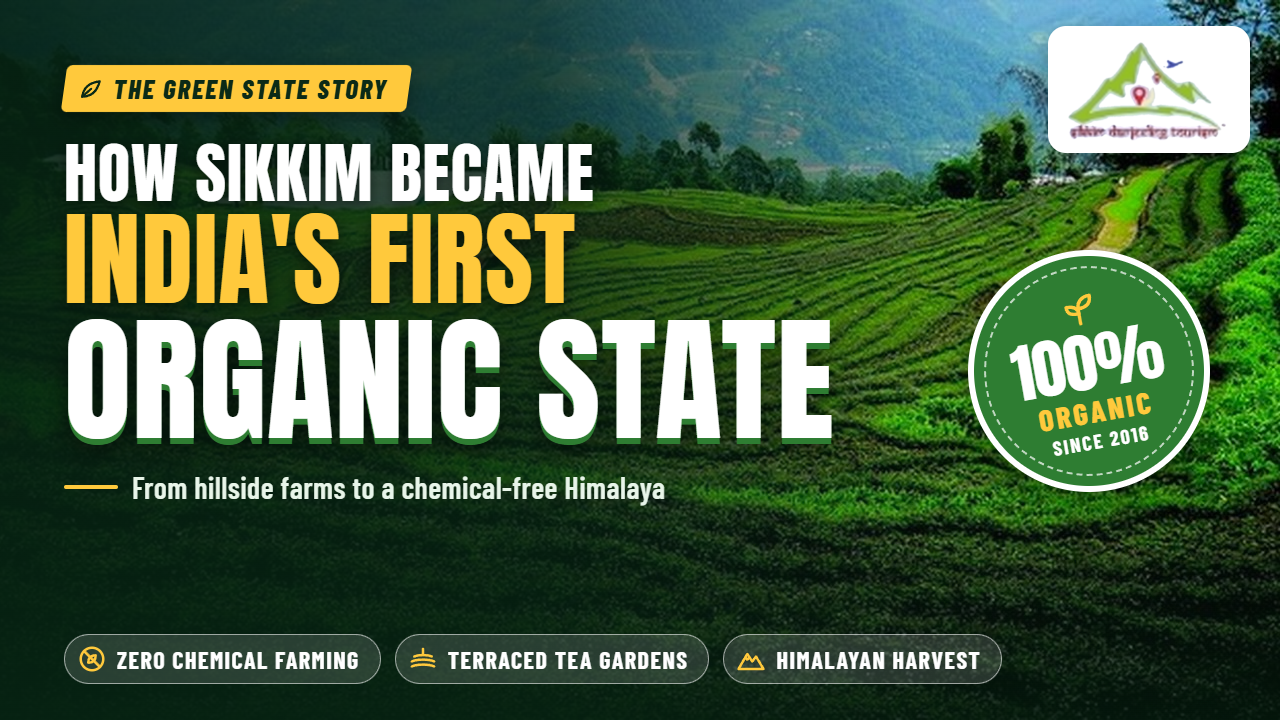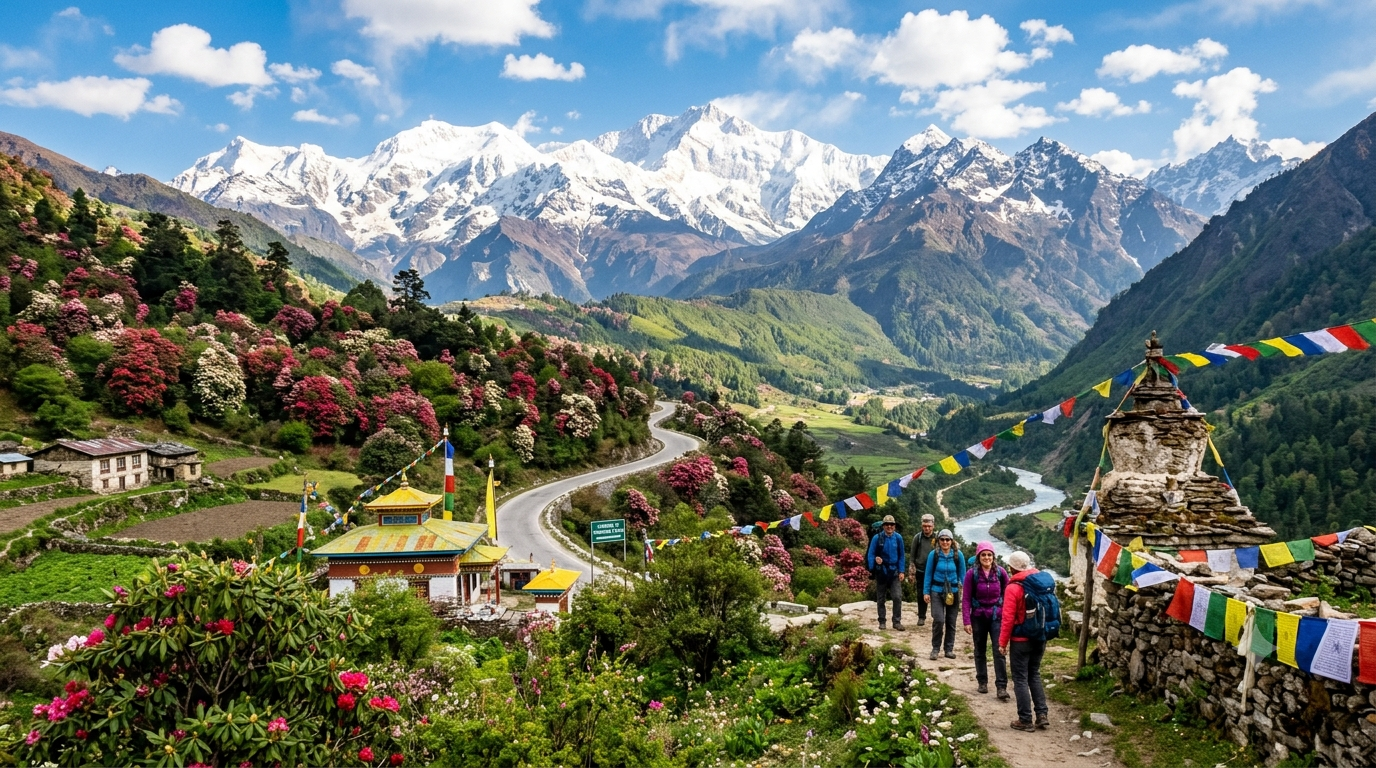
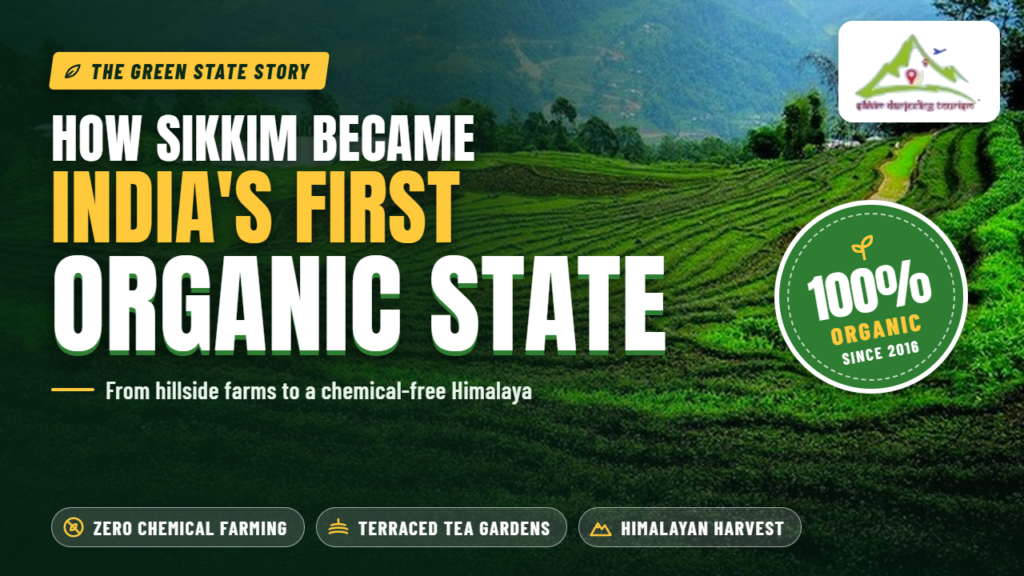
The first organic state of India is Sikkim, a small Himalayan state where farming is completely free from chemical fertilisers and pesticides. Here, the land breathes purity, and sustainability isn’t a buzzword but a way of life. Sikkim took on a mission many thought impossible and turned it into a global success story. So how did it pull this off? Let’s dive into the journey, the impact, and what lies ahead. Imagine a place where farming is completely free from chemicals, where the land breathes purity, and where sustainability isn’t just a buzzword but a way of life. That place is Sikkim, India’s first 100% organic state. This small Himalayan wonder took on an ambitious mission—one that many thought was impossible—and turned it into a global success story. But how did Sikkim achieve this remarkable feat? Let’s take a deep dive into its journey, the impact of organic farming, and what the future holds.
The Journey to Becoming India’s First Organic State
A Bold Vision Takes Shape
The seeds of Sikkim’s organic revolution were planted in 2003 when then-Chief Minister Pawan Kumar Chamling envisioned a future where the state’s entire agricultural landscape would be chemical-free. He believed that embracing organic farming would not only protect the environment but also improve people’s health and create sustainable livelihoods for farmers.
Step-by-Step Implementation
Making an entire state organic wasn’t going to happen overnight. It took careful planning, strong policies, and unwavering commitment. Here’s how it was done:
Banning Chemical Fertilizers & Pesticides: By 2010, the state government completely phased out synthetic fertilizers and pesticides.
Training & Supporting Farmers: Farmers were educated on organic farming methods, given subsidies, and helped with the transition.
Certification Process: To ensure quality, all farmland underwent organic certification under national and international standards.
- Legislative Support: In 2016, Sikkim was officially declared India’s first organic state—a historic moment for the country.
A Win on the Global Stage
Sikkim’s hard work didn’t go unnoticed. In 2018, it was awarded the UN FAO’s Future Policy Gold Award, often called the ‘Oscar for Best Policies’ in sustainable agriculture. This recognition placed Sikkim on the world map as a leader in organic farming.
Why Going Organic Was a Game-Changer
A Greener, Healthier Environment
The shift to organic farming brought some incredible environmental benefits:
Soil health improved, with increased natural fertility.
Water sources became cleaner, free from harmful chemicals.
- Biodiversity thrived, with healthier ecosystems supporting bees, birds, and other wildlife.
Economic Growth & Farmers’ Well-Being
While some worried that going organic would harm the economy, Sikkim proved the opposite:
Higher prices for organic produce meant better income for farmers.
Exports of organic products gave Sikkim a competitive edge in global markets.
- Government support helped ease the financial burden on farmers during the transition.
Travelling to India’s First Organic State
Sikkim’s organic status became a huge attraction for eco-conscious travelers. People now visit not just for the mountains but also for experiences like:
Farm-to-table dining at organic cafes and homestays.
Tours of organic tea gardens, like the famous Temi Tea Estate.
- Staying at eco-resorts that promote sustainable living.
Challenges & The Road Ahead
Of course, no revolution comes without its challenges. Sikkim still faces hurdles in maintaining its organic status:
Limited availability of organic fertilizers and compost.
Higher costs of organic farming compared to conventional methods.
The need for stronger branding and better market access for organic products.
- Unpredictable climate changes, which can impact crop production.
Despite these challenges, Sikkim remains committed to its organic mission. The state is now working towards expanding organic processing units, improving market linkages, and ensuring long-term sustainability.
Conclusion: A Model for the World
Sikkim’s journey proves that a chemical-free future is possible. It stands as a shining example for other states—and even countries—looking to adopt sustainable farming. More than just a policy, organic farming in Sikkim is a movement that protects nature, supports farmers and promotes a healthier way of living.
Want to See Sikkim’s Organic Revolution Firsthand?
Come and explore India’s first organic state with Sikkim Darjeeling Tourism . Whether it’s visiting lush organic farms, sipping on pure organic tea, or staying at an eco-homestay, Sikkim offers a unique experience like no other.
Plan your eco-friendly journey today at sikkimdarjeelingtourism.com
Which is the first organic state in India?
Sikkim. It was officially declared India’s first fully organic state in January 2016.
When did Sikkim become an organic state?
The journey began with a political commitment in 2003. It was followed by a State Policy on Organic Farming in 2004 and the Sikkim Organic Mission in 2010, and Sikkim was declared fully organic in 2016.
Who started the organic mission in Sikkim?
It was led by then Chief Minister Pawan Kumar Chamling’s government, starting in 2003.
What award did Sikkim win for organic farming?
Sikkim won the Future Policy Gold Award in 2018, nicknamed the “Oscar for best policies”. It was co-organised by FAO, the World Future Council and IFOAM – Organics International.
How many farmers benefit from organic farming in Sikkim?
Sikkim’s organic policy is reported to have benefited over 66,000 farming families.
Can tourists visit organic farms in Sikkim?
Yes. Many organic homestays offer farm-to-table meals and farm walks. Temi Tea Garden in South Sikkim is a popular organic tea estate to visit.