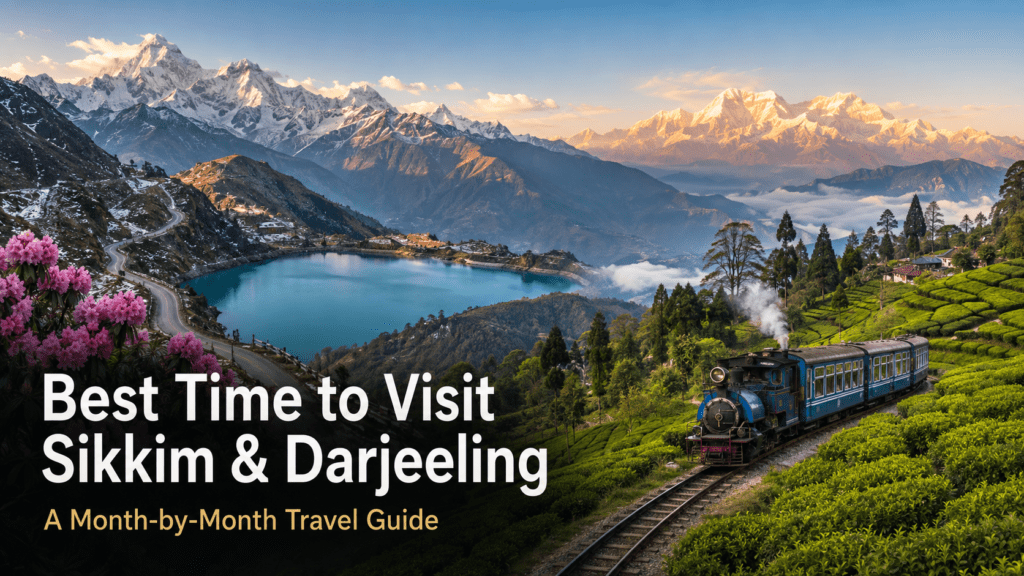
Imagine two holidays. In the first, Kanchenjunga appears above Darjeeling, turning the morning sky golden. In the second, clouds are hiding the mountains, and rain is changing the day’s route, making your sightseeing list stay inside your bag.
Sikkim and Darjeeling are almost the same, but seasons change the entire scenario.
That’s why picking the best time to visit Sikkim and Darjeeling isn’t always about finding a month with great weather. It depends on what you want out of the trip: snow in the higher altitude regions, brilliant flowers, clear mountain views, quieter streets, or an affordable vacation.
This blog will explain why every season and month, which will help you plan a Sikkim-Darjeeling trip that will suit the experience you want.
Quick Answer: What is the Best Time to Visit Sikkim and Darjeeling?
For most travellers across the nation, the best time to visit Sikkim and Darjeeling is from March to May or from October to mid-December.
- March to May: Soothing weather, spring flowers, and comfortable sightseeing conditions,
- October to mid-December: Crystal clear skies, panoramic view of the mighty Himalayas, and cool, refreshing weather.
- Late December to February: Suited for winter lovers and the possibility of snow in higher parts of Sikkim, but road closures can sometimes affect the routes.
- July to September: Lush greenery everywhere and less crowded, but heavy rain, fog, and landslides can disrupt road travel.
Many legit Sikkim tourism weather guides also identify spring and autumn as the most ideal travel windows. However, the right month can also depend on whether your priority is snow, flowers, views, budget, or easy road access.
Why One “Best Month” Does Not Work for Both Places
Sikkim and Darjeeling are often combined in most of the travel packages or itineraries, but their travel conditions are not identical.
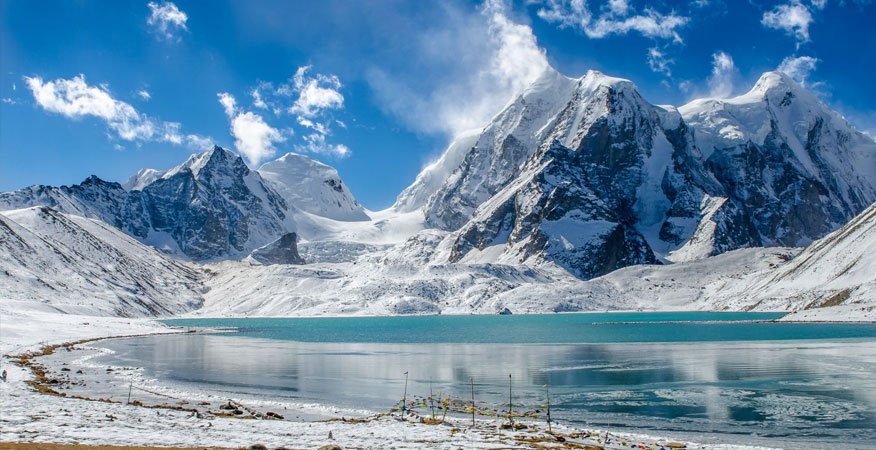
Darjeeling, the world-renowned hill station, is famous for its tea gardens, the toy train, colonial-era charm, and views of Kanchenjunga. Sikkim covers a variety of altitudes, from Gangtok and Peeling to high-altitude destinations such as the Tsomgo Lake, Nathula Pass, Yumthang Valley, and Gurudongmar Lake.
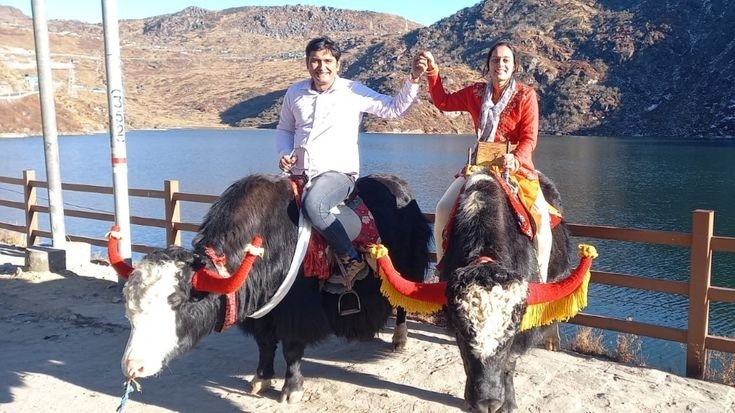
This clearly means it may be sunny in Darjeeling, while, on the other hand, a high mountain route in Sikkim can stay closed because of snow or rain. Likewise, Darjeeling town rarely receives significant snowfall even when higher areas of Sikkim are covered in a thick blanket of white.
As a result, the best time to visit Sikkim and Darjeeling should be determined by the highest altitude location in your itinerary rather than just the Gangtok or Darjeeling town weather forecast.
Best Season at a Glance
Before comparing individual months, this overview below shows how the best time to visit Sikkim and Darjeeling changes according to the experience that suits you the most.
Travel period | Best for | What to expect | What to consider |
March to May | Families, couples, flowers and sightseeing | Pleasant days, cool evenings and blooming landscapes | Popular dates can become busy. |
June | Summer escapes and family holidays | Mild temperatures with increasing rain | Rain becomes more frequent later in the month. |
July to September | Greenery, slow travel and fewer crowds | Mist, waterfalls, lush tea gardens and lower demand | Landslides, cloudy views, and possible road delays |
October to November | Clear views and photography | Crisp skies, comfortable weather, and excellent visibility | High demand during holidays and festivals |
December to February | Cold weather and snow experiences | Clear winter mornings and possible snow at higher altitudes | Some high-altitude routes may close temporarily. |
Spring: March to May
Spring could be considered the most balanced answer for travellers asking about the best time to visit Sikkim and Darjeeling, because after the cold becomes milder, flowers begin to color the hills and most sightseeing days feel comfortable.
March: Quiet Hills and Beginning of Spring
During the month of March, the mornings carry a little winter, but still introduce the first signs of spring during the day. The air remains cool, tourist crowds are more manageable than in April and May, and the visibility can be rewarding.
This month is favourable for visiting Gangtok, Peeling, and Darjeeling sightseeing. However, permits or access to very high-altitude places may still depend on snow clearance and daily weather conditions.
Choose March if you are looking for:
- Cool weather without the harsh winter cold.
- Fewer crowds than the main summer season
- A chance to see lingering snow in higher areas
- Comfortable walks through Darjeeling and Gangtok
April: Flowers, Colour, and Comfortable Weather
The hills come to life in April. While Darjeeling’s tea gardens appear vibrant and new, many parts of Sikkim are brightened by rhododendrons and other seasonal flowers. It is easier to visit local markets, gardens, monasteries, and viewpoints because the days are usually pleasant.
For families, first-time visitors, or couples, April is often the best time to visit Sikkim and Darjeeling. Demand also rises, so hotels, tickets for different attractions, and reliable vehicles should be booked early.
May: Family-Friendly but Busier
May is very popular amongst Indian families, as it coincides with the school holiday period. It is much more comfortable weather than in summer in the plains, but tourist areas can be very, very busy, and pre-monsoon showers can come out of nowhere.
If you are travelling during the month of May, you should go for outdoor sightseeing early cause mornings give better visibility, as clouds may appear later in the day.
Overall, the spring season remains the best time to visit Sikkim and Darjeeling for tourists looking for vibrant landscapes, comfortable sightseeing, and broad route availability.
Early Summer: June
As June sits between the popular summer season and the arrival of stronger monsoon conditions, there is a 50-50 chance that this month might work well for a family escape because the possibility of rain usually increases as the month progresses.
This is the best time of the year for travellers’ school vacations and the least busy part of May to visit Sikkim and Darjeeling. As the trade-off is less predictable visibility, you can receive a clear morning, a cloudy day, and a short shower, all on the same day.
If North Sikkim is present in your itinerary, you should keep it flexible and confirm road and permit conditions locally before departure.
In short, early June can be the best time to visit Sikkim and Darjeeling if your dates are tied to school holidays, and you accept the chance of occasional rain.
Monsoon: July to September
In new headlines, you might see that Moonsson makes the hill quite risky and dangerous, but there is also another side of it, which is quite the opposite: more greenery, clouds that look like they are painted on a canvas, beautiful waterfalls, and much more.
Heavy rain can create landslides, blockages in the road, and longer travel times. Kanchenjunga could stay cloaked in clouds for days, and high-altitude routes through Sikkim may be closed, depending on conditions. If you have fixed flights, young children, elderly relatives, or a packed itinerary, then you should consider these risks carefully.
For someone who is travelling for the first time, the monsoon is not the best time to visit Sikkim and Darjeeling. It may suit travellers who are photographers, repeat visitors, tea lovers, or slow travellers who are comfortable changing plans.
Autumn: October to November
After the monsoon is over, the mountains look newly washed. Skies are clearer, humidity drops, and views of Kanchenjunga are often at their best. “Days are still comfortable, but mornings and evenings have a good chill to them.
October and November are the best times to visit Sikkim and Darjeeling for scenic views, photography, and easy sightseeing. The clear mornings at the viewpoints of Tiger Hill, Batasia Loop, and the tea gardens of Darjeeling are particularly rewarding. In Sikkim, Gangtok, Pelling, and various approved high-altitude trails offer dramatic Himalayan scenery, depending on the day’s conditions.
The only drawback is the popularity. Festival holidays can increase hotel demand and traffic on the roads, so if you leave it to the last minute, it could lessen your choices.
Choose your poison:
- Better views of Kanchenjunga
- Sightseeing on comfortable days
- Good conditions for taking photos
- A family-friendly or honeymoon experience
These advantages make autumn the best time to visit Sikkim and Darjeeling for most first-time visitors.
Winter: December to February
Winter alters the mood of the journey. The mornings are crisp and the evenings call for warm cafes and hot momos, and the mountains often look sharp against clear skies. While Sikkim could see snowfall in the upper reaches, Darjeeling has the cold hill-town charm.
December: Clear Views and Festive Energy
Early and mid-December can be a great combo of manageable cold and clear views. As the month continues, temperatures drop, and the chance of snow increases at higher elevations.
For travellers and couples who love winter but do not want the coldest conditions, December could be the best time to visit Sikkim and Darjeeling.
January and February: For True Winter Lovers
January is usually the coldest time of year. If you’re a snow seeker, your best bets are around Tsomgo Lake, Nathula Pass, Zero Point, and other high-altitude places, but snow is never a guarantee. The same weather that gives us the beautiful white scene can also close the road that leads to it.
February is still cold, but it is slowly creeping toward spring. It will suit travelers who like quieter streets and don’t mind lugging heavy woollens around.
Remember: Darjeeling town is not a reliable snowfall destination. If you are travelling for the snow, aim for higher areas but have a day of backup sightseeing.
But for those who like cold weather and flexible plans, winter can still be the best time to visit Sikkim and Darjeeling.
Best Time to Visit Sikkim and Darjeeling: Month-by-Month Travel Calendar
Month | Overall experience | Best suited for |
January | Very cold, possible high-altitude snow, some route uncertainty | Winter lovers and flexible snow seekers |
February | Cold and relatively quiet, spring slowly approaches. | Couples and crowd-conscious travellers |
March | Cool, pleasant, and less crowded. | Sightseeing and lingering winter scenery |
April | Colourful, comfortable and popular. | Families, flowers and first-time visitors |
May | Pleasant but busy, occasional showers possible. | School-holiday family trips |
June | Mild with increasing rain and clouds. | Flexible summer travellers |
July | Wet, green and misty | Slow travel and monsoon lovers |
August | Lush but rain-prone, views may remain cloudy. | Budget-conscious repeat visitors |
September | Rain gradually reduces later in the month. | Flexible travellers seeking fewer crowds |
October | Clear, fresh and highly scenic | Photography, families and couples |
November | Crisp views and cooler weather | Himalayan views and relaxed sightseeing |
December | Cold, festive and increasingly wintry | Couples, winter trips and possible snow experiences |
Best Time to Visit Sikkim and Darjeeling Based on Your Travel Style
For a Family Holiday
April, May, October, and November tend to offer the best mix of weather and sightseeing. Families with children or senior citizens should avoid overly packed routes and include rest stops between long drives.
The best time to visit Sikkim and Darjeeling for most families is between the months of April and May or October and November.
For a Honeymoon
The best time to visit Sikkim and Darjeeling for a honeymoon would usually be March to April for flowers and comfortable weather or October to December for clear views and cosy evenings. For couples seeking a quieter trip, February is also a good option – if you don’t mind the cold.
For Snow
Tourists have a better opportunity of getting snow in the higher reaches of Sikkim from December end to February. But snowfall is a natural and unpredictable phenomenon, and no package should guarantee snowfall on a particular date.
The best time to visit Sikkim and Darjeeling for a snow-centric holiday requires flexible expectations, backup plans, and room for weather-related route changes.
For Flowers and Rhododendrons
The best time to visit Sikkim and Darjeeling is generally April to May, especially if you intend to visit North Sikkim or other flowering belts, for flowers and rhododendrons. Blooming times can vary a bit with altitude and the weather of the year.
For Clear Kanchenjunga Views
The best time for clear views of Kanchenjunga is generally in October to November, because of post-monsoon clarity and comfortable temperatures. The weather is a lot colder, but winter mornings can be surprisingly clear too.
For Fewer Crowds and Better Value
February, March, or parts of September are away from major holiday periods if you want to avoid the crowds. Monsoons can bring lower demand, but saving money is only useful if the weather still allows the experience you want.
Sikkim to Darjeeling Distance: What Travellers Should Know
There’s no one answer to the phrase Sikkim to Darjeeling distance, because Sikkim is a whole state, not one city. Most of the searches on travel are asking about the trip from Gangtok to Darjeeling.
The commonly traveled distance by road between Gangtok and Darjeeling is about 95 to 100 km, and it normally takes about four to five hours to drive. Weather, traffic, roadwork, and stops can add to the length of the trip.
Approximate travel estimates include:
Route | Approximate distance | Usual travel time |
Gangtok to Darjeeling | 95–100 km | 4–5 hours |
Pelling to Darjeeling | 70–75 km | 3–4 hours |
NJP/Bagdogra to Darjeeling | 70–75 km | 3–4 hours |
NJP/Bagdogra to Gangtok | 120–125 km | 4.5–5.5 hours |
These are planning estimates, not firm times. Kilometres are not the best indicator of a mountain trip. Hours are. Road conditions and weather conditions affect the speed.
Always, especially at peak holiday times or in unsettled weather, allow extra time on a Sikkim-Darjeeling route.
Mountain traffic can extend the transfer even in the best time to visit Sikkim and Darjeeling, so don’t plan any important flight or train too close to this journey.
If you are comparing Sikkim and Darjeeling tour packages, do check the city from which the distance from Sikkim to Darjeeling is being calculated. A package that says “Sikkim” without a concrete starting point may lead to an unrealistic itinerary.
Should You Visit Sikkim or Darjeeling First?
Both sequences are possible if you come to Bagdogra Airport or NJP Railway Station. Most travellers want to visit Gangtok first and end up in Darjeeling, as Darjeeling is generally closer to Bagdogra and NJP. This can help make the last day of departure less tiring.
A practical seven-day route could be:
- Day 1: Arrive and transfer to Gangtok
- Day 2: Tsomgo Lake & Baba Mandir, permits & weather permitting
- Day 3: Local Sightseeing in Gangtok
- Day 4: Gangtok to Darjeeling Transfer
- Day 5: Darjeeling Sightseeing: Tiger Hill, Batasia Loop
- Day 6: Toy Train, Tea Garden and Free Time
- Day 7: Transfer to NJP or Bagdogra
If you want to include North Sikkim or Pelling, plan for at least eight to ten days. Packing in Gangtok, North Sikkim, Pelling, and Darjeeling on a short holiday can turn a mountain escape into a series of long drives.
A rushed itinerary cannot be improved by choosing the best time to visit Sikkim and Darjeeling. Good planning is just as important as good weather.
What Good Sikkim and Darjeeling Tour Packages Should Include
Travelling at the best time to visit Sikkim and Darjeeling, the weather in the mountains can be unpredictable. So a package should include more than hotels and a vehicle.
A well-paced Sikkim-Darjeeling vacation should feel like a journey through the hills, not a race between hotel check-ins.
Well-planned Sikkim and Darjeeling tour packages should include:
- Pick up & drop from NJP Railroad Station or Bagdogra Airport
- Hotels selected as per the comfort and location preference of the traveller
- Group size and a vehicle suitable for hill roads
- Clear information on permits and restricted-area sightseeing
- Realistic transfer times and enough rest
- Clear inclusions, exclusions and additional costs
- Local support for changing weather or road conditions
- Backup suggestions for sightseeing affected
Don’t pick a package just because it includes the most places. A good Sikkim-Darjeeling itinerary lets you experience the destination instead of spending most of the holiday inside a car.
Essential Planning Tips Before You Book
Once you have selected the best time to visit Sikkim and Darjeeling, make your Sikkim-Darjeeling travel plan safer, smoother, and more realistic by using the following checks.
Keep One Flexible Day
Weather can change plans at high altitude with little notice. A buffer day at the end of your trip protects the rest of your itinerary and reduces stress before you head home.
Carry Layers in Every Season
Temperatures can drop and rise sharply between afternoon and evening or between Darjeeling town and a high-altitude Sikkim excursion. Pack layers instead of depending on one heavy jacket.
Keep Rain Protection Handy
Short showers may occur even outside the main monsoon period. A small umbrella, waterproof shoes, and covers for phones and cameras are useful.
Carry the Correct Identification
Protected areas of Sikkim are permit-restricted. The required documents will vary according to nationality and destination, and rules may change. Bring your original valid ID and passport-size photographs, and check the latest requirements before you travel.
Do Not Build a Tight Departure Day
Avoid transferring a long distance by hill too close to a flight or train. Traffic, roadwork or an unexpected block can make journeys longer.
Frequently Asked Questions
What is the best time to visit Sikkim and Darjeeling overall?
April–May and October–November are best for pleasant weather and clear mountain views.
What is the best time to visit Sikkim and Darjeeling for snowfall?
December to February is best for snow in higher Sikkim. Darjeeling rarely gets snowfall.
What is the Sikkim to Darjeeling distance?
Gangtok to Darjeeling is about 95–100 km and takes around 4–5 hours by road.
How many days are enough for Sikkim and Darjeeling?
6–7 days is ideal, 8–10 days if adding North Sikkim or Pelling.
When should I book Sikkim and Darjeeling tour packages?
Book early for April, May, October, November, and holiday seasons for the best options.