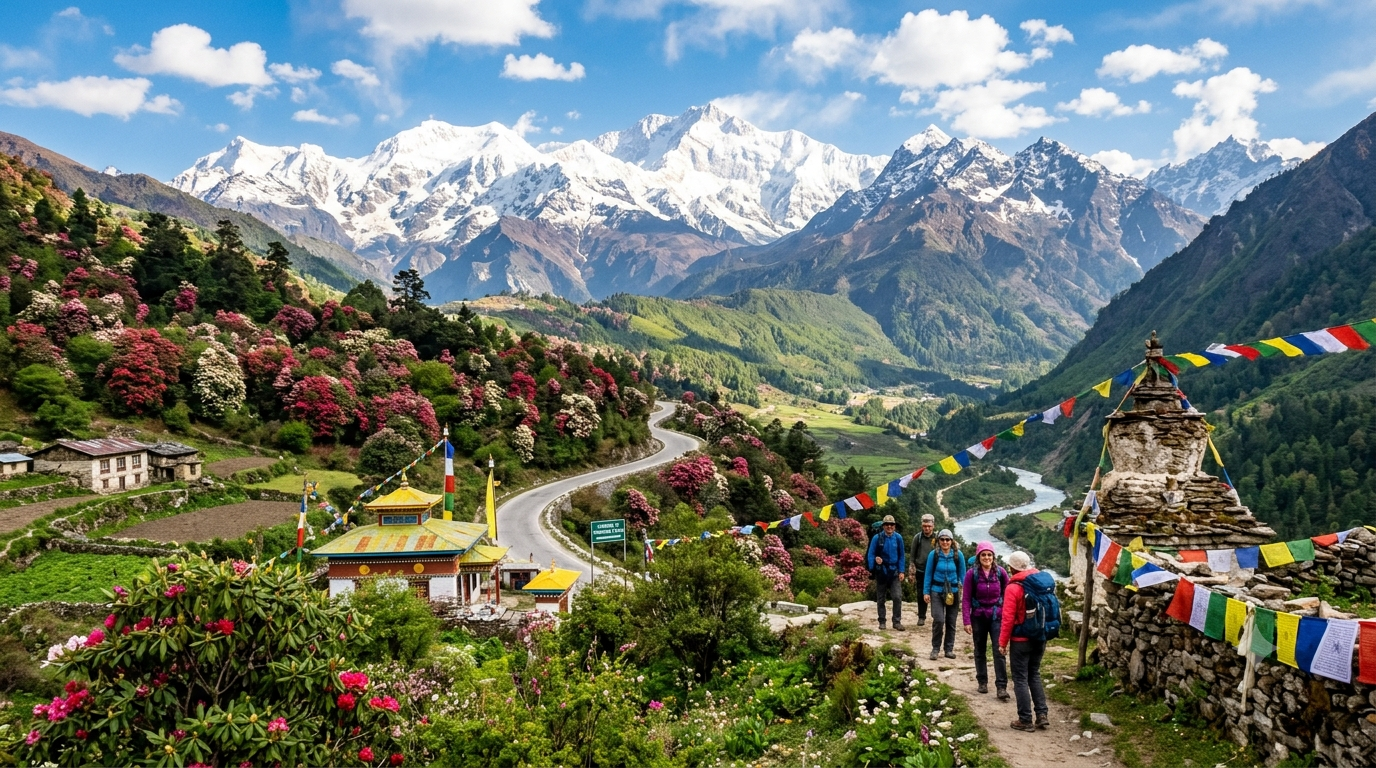
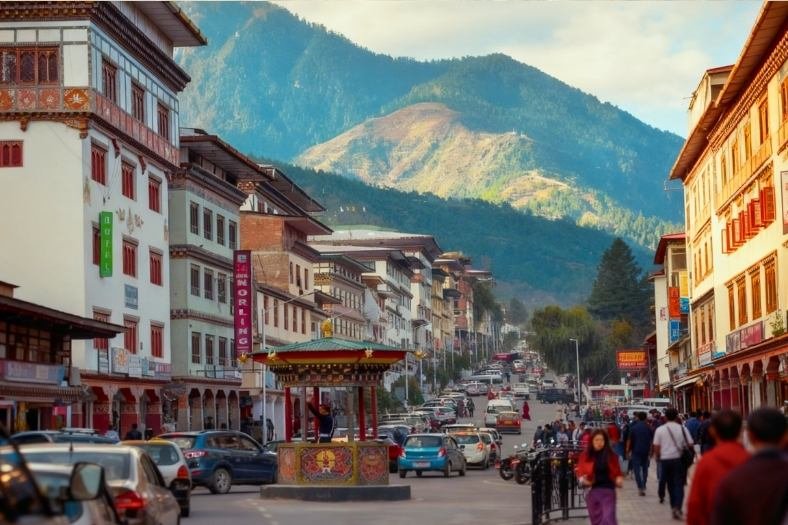
Thimphu, the capital of Bhutan, is a city that is a little bit different. Instead of skyscrapers, you have Himalayan mountains; instead of shopping malls, you have monasteries. The city center is famously devoid of traffic lights.
Nestled in a beautiful valley on the Wang Chuu River, Thimphu Bhutan is a blend of traditional Bhutanese culture and modern life. In the morning, visit a centuries-old monastery; in the afternoon, shop at a local market; and in the evening, enjoy a café.
Thimphu is a great intro to Bhutan for travellers who want somewhere that is not boring but is quiet.
Where is Thimphu?
Thimphu is located in west-central Bhutan, at an elevation of about 2,300 meters above sea level. It lies on the Wang Chuu River, encircled by forest-covered mountains.
The city is approximately 50km from Paro, where the main international airport in Bhutan is located. The drive from Paro to Thimphu usually takes about 1 to 1.5 hours depending on the road and traffic conditions.
Information | Details |
Location | Western Bhutan |
Elevation | Approximately 2,300 m |
Nearest Airport | Paro International Airport |
Distance from Paro | Around 50 km |
Main River | Wang Chhu |
Best known for | Monasteries, markets, culture and mountain scenery |
Thimphu is not a tourist stop but the political and administrative capital of Bhutan. Its landscape is filled with government offices, royal institutions, businesses, and cultural landmarks.
Best time to visit Thimphu
When to go to Thimphu depends on what you want to get out of your Thimphu travel. Spring and autumn are generally seen as the most comfortable seasons, with comfortable weather, clearer skies, and good conditions for sightseeing.
Flowers bloom in springtime; the grass is green and new. The autumn weather is crisp, and the views of the mountains are beautiful.
Season | Weather & Experience |
March–May | Pleasant, green landscapes and flowers |
June–September | Monsoon showers; greener scenery but occasional travel disruptions |
October–November | Clear skies and excellent sightseeing conditions |
December–February | Cold, with chilly mornings and possible snowfall in higher areas |
It can be surprisingly cold in winter, particularly in the morning and after dark. Layer up, unless you want to discover your fancy travel jacket doesn’t stand a chance in Himalayan weather.
How to reach Thimphu
By air
If you are planning a trip to Thimphu from outside Bhutan, the easiest international option is to fly into Paro International Airport.
Because of the possibility of schedule changes and weather, it’s best to build some flexibility into your itinerary when booking flights to Bhutan.
By Road
Phuentsholing is one of the most common entry points for travelers coming into Bhutan from India through designated land entry points.
The terrain is hilly, and the roads are winding, and it takes a couple of hours to get to Thimphu from Phuentsholing. But the landscape is part of the feeling of the trip.
Getting around in Thimphu
Thimphu is a pretty compact city, and most of the central sights are within walking distance. Walking is one of the best ways to experience the city, as you can see small details that tend to get lost behind a car window.
Taxis are the easiest way to get from attraction to attraction. If you are travelling with Thimphu tours or an organised Bhutan tour, transport is usually included as part of your itinerary.
If you wish to visit places outside the city center, it is normally more convenient to hire a car and driver locally.
Best Activities in Thimphu
Thimphu has an interesting mix of religious sites, cultural attractions, viewpoints and markets. If you’re wondering about the best places to see in Thimphu, here are some worth adding to your itinerary.
1. Dordenma Statue of Buddha
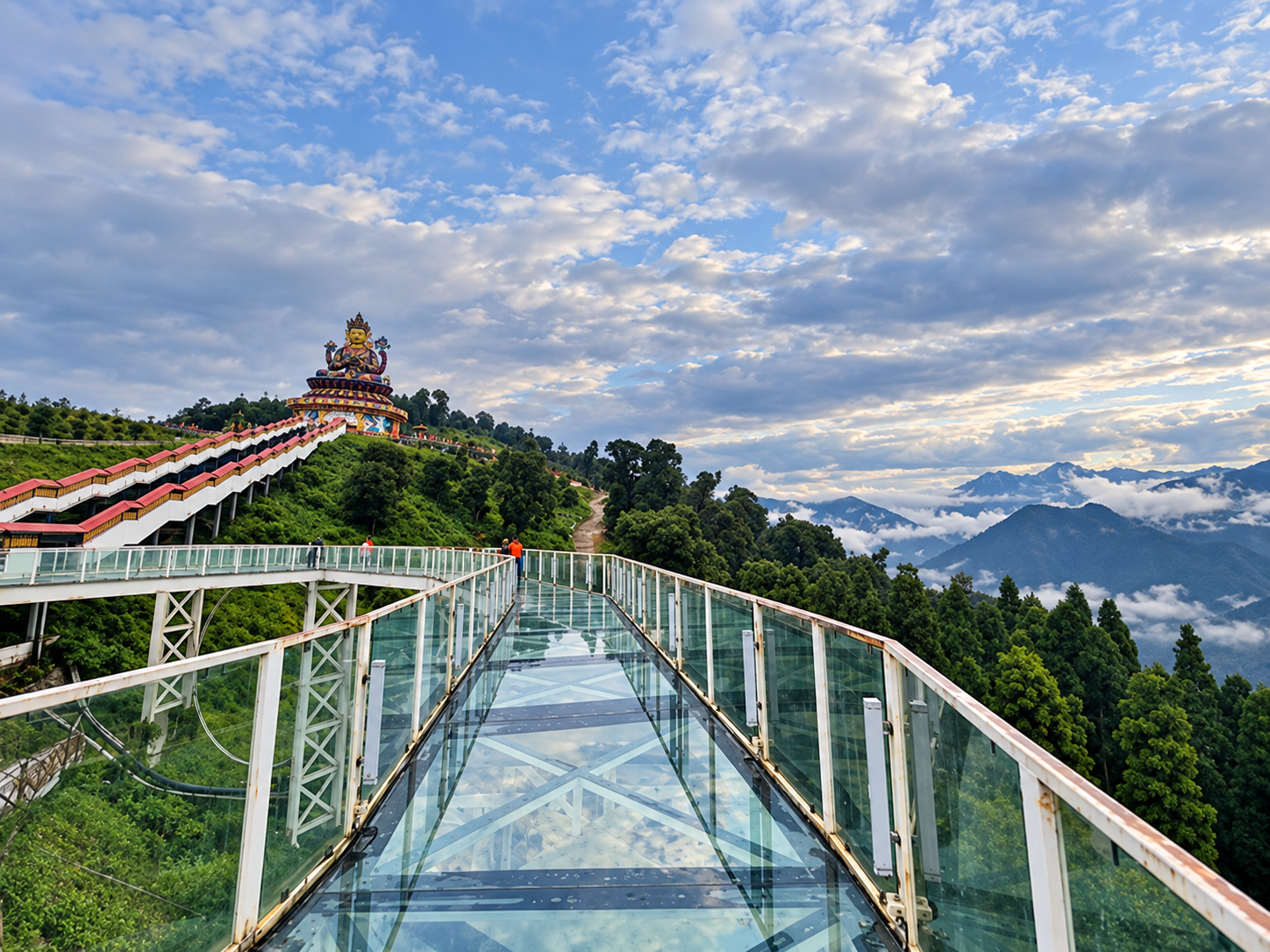
The giant Buddha Dordenma Statue is one of the most famous landmarks of Thimphu.
The statue is on a hill above the city in Kuenselphodrang, with beautiful views of the surrounding valley.
The site is particularly beautiful in the early morning when the mountains and valley are often bathed in soft light.
2. Tashichho Dzong (Tashichho Dzong)
Tashichho Dzong is one of the most significant architectural monuments in Bhutan. Next to the Wang Chuu River the impressive fortress-monastery is a major center of government and religion.
It has traditional Bhutanese architecture with intricate woodwork, painted features, and large courtyards.
Dress code: Visitors to religious and government sites should dress respectfully.
3. Chorten Memorial
One of the most visited religious landmarks of the city, the National Memorial Chorten is located near the center of Thimphu.
The chorten commemorates Bhutan’s third King, Jigme Dorji Wangchuck, and remains an important place of worship for locals.
You will often see people walking around the structure spinning prayer wheels and offering prayers.
4. Motithang Takin Sanctuary
Want to see an animal that looks like nature couldn’t decide what it wanted to make?
Motithang Takin Conservation Area.
The national animal of Bhutan is the takin, a very distinctive-looking large mammal. The reserve is a chance to see these strange animals and learn more about Bhutan’s wildlife.
5. Simply Bhutan
Simply Bhutan gives the visitor a glimpse of traditional Bhutanese culture and daily life.
The experience includes traditional architecture, clothing, food, music, and cultural displays. It’s particularly helpful for first-timers who want some background before heading elsewhere in the country.
6. Museum of Folk Heritage
The Folk Heritage Museum provides an insight into the traditional Bhutanese home.
The museum recreates aspects of a traditional Bhutanese house and displays objects and practices linked to rural ways of life.
Good stop if you want to know more about Bhutan than its monasteries and mountain scenery.
7. Farmers Market at Centenary
For a more everyday feel of Thimphu, visit the Centenary Farmers Market.
On weekends, the market is especially busy, with vendors selling vegetables, fruits, grains, spices, local products, and other goods.
It’s a great place to experience local life and learn about ingredients and produce of Bhutan.
Remember: a market visit is to browse, to taste, and to learn, not to aggressively haggle over every chilli pepper.
8. Clock Tower Square
One of the most popular hangout places in central Thimphu is Clock Tower Square.
The square is surrounded by cafes, restaurants, and shops, so it’s a good place to take a break between sightseeing stops.
The surrounding buildings are of the traditional Bhutanese design, giving the place a distinct character.
9. Changlimithang Stadium
Changlimithang Stadium is a major sporting venue in Bhutan. It is particularly associated with football.
If you are in the area for a match or event, it can be a fun way to experience the local atmosphere.
Even if you don’t find a match, it’s worth including the area in any itinerary of central Thimphu.
Things to do in Thimphu
Thimphu Tourism is only one part of the experience. Allow some time to slow down and enjoy the city itself.
- Experience Bhutanese architecture: Thimphu is rich in traditional styles, from religious structures to government buildings and private residences.
- Visit local markets: Farmers’ markets are a great place to buy fresh produce, handicrafts, and traditional products.
- Try Bhutanese food: Try dishes such as ema datshi, phaksha paa, momos, and red rice.
- Visit monasteries and chortens: These give you more of an insight into the Buddhist traditions of Bhutan.
Enjoy the views: The hills around Thimphu have great views over the valley.
Walking around Central Thimphu is very enjoyable, particularly when the weather is good, and you can take your time.
Food in Bhutan
Bhutanese food is warming, hearty, and not lacking chilli.
For the adventurous food lover, there is the famous ema datshi made with chillies and cheese, a must-try. But if you are sensitive to spice, be sure to let them know before your meal arrives.
Other dishes to try:
- Ema Datshi: Cheese cooked with chillies
- Kewa Datshi Potatoes with Chilli and Cheese
- Phaksha paa pork with spice and chillies
- Jasha Maru Minced Chicken with Spices
- Bhutanese Style Momos Dumplings
- Red Rice: A Bhutanese Staple
There are also cafes and restaurants in Thimphu serving international cuisines, so you won’t have to eat chilli and cheese for every meal.
Shopping in Thimphu:
Thimphu is a good place to shop for traditional Bhutanese handicrafts, textiles, artworks, incense, prayer flags and home-made products.
Look for real handmade things, not just mass-produced knick-knacks. Bhutanese textiles are very popular and good souvenirs with significance.
There are also modern shops and cafés, so the city has a comfortable mix of old and new.
How many days in Thimphu is enough?
Most sights can be seen in 1-2 days by most visitors. A one-day itinerary could be dedicated to the Buddha Dordenma Statue, Memorial Chorten, Tashichho Dzong, local markets, and central Thimphu. You have two days to spend exploring the city, adding museums, the Takin Preserve, cafes, and more cultural experiences. Visitors to Bhutan usually combine a trip to Thimphu with a visit to Paro, Punakha and other places, rather than coming only to Thimphu.
Tips for travel to Thimphu
Practical points to remember before you travel:
- Make sure to bring layers, as temps can vary greatly throughout the day.
- Bring comfortable walking and sightseeing shoes.
- When visiting monasteries, dzongs, and places of religious interest, dress modestly.
- Payment options are becoming more common, but it’s still wise to have some cash on hand for smaller stores and local buys.
- No photos of religious services or people without permission.
- Respect local rules for photography in places of worship.
- Weather in the Himalayas can play havoc with road journeys, so build in some flexibility to your schedule.
- Respect Bhutanese culture and Buddhist traditions.
Above all, don’t try to rush through Thimphu like you’re ticking off attractions on a spreadsheet. The city has its charm in its slow pace.
2-Day Itinerary in Thimphu
Day | Morning | Afternoon | Evening |
Day 1 | Buddha Dordenma | Memorial Chorten & Tashichho Dzong | Explore central Thimphu |
Day 2 | Takin Preserve | Folk Heritage Museum & Farmers’ Market | Café or local dinner |
The itinerary is flexible and is dependent on weather, opening hours, and your travel arrangements.
Why you should include Thimphu in your Bhutan itinerary
Thimphu is more than a capital city; it is a meeting point of many facets of Bhutan.
Traditional Buddhist culture blends with cafes, markets, modern businesses, and everyday city life. Ordinary drives are scenic thanks to the surrounding mountains, and the city’s relaxed vibe encourages travellers to slow down.
If you are interested in architecture, food, culture, photography, or just want to get away from the hustle and bustle of everyday life, Thimphu has a lot to offer.
You can also exit without seeing a single traffic light. Yes. The city somehow manages.
Experience the Charm of Thimphu
The idea of going to Thimphu is not so much to rush from one attraction to another, but to experience Bhutan at its own pace. The capital is a great way to start your trip with its imposing Buddha Dordenma and ancient Tashichho Dzong, bustling markets, and traditional eateries.
Take your time to see beyond the obvious sights. Walk the streets, try the local food, visit a market, and stop to enjoy the mountains every once in a while.
After all, if there is one destination where slowing down is on the itinerary, it is Bhutan.
What is Thimphu famous for?
Thimphu is famous for its blend of Bhutanese culture, Buddhist landmarks, traditional architecture and Himalayan scenery. Popular attractions include Buddha Dordenma, Tashichho Dzong, the National Memorial Chorten and local markets.
Which are the best places to visit in Thimphu?
The main places to visit include Buddha Dordenma, Tashichho Dzong, the National Memorial Chorten, Motithang Takin Preserve, Simply Bhutan, the Folk Heritage Museum, Centenary Farmers Market, Clock Tower Square and Changlimithang Stadium.
How many days are enough to explore Thimphu?
One to two days can cover Thimphu’s main attractions. Two days allow more time for museums, markets, cultural experiences and local food without rushing through the sightseeing.
What is the best time to visit Thimphu?
March to May and October to November are generally favourable for sightseeing. Spring brings flowers and green landscapes, while autumn offers cooler weather and opportunities for clearer mountain views.
How can travellers reach Thimphu?
ravellers can fly to Paro International Airport and continue to Thimphu by road. Those entering Bhutan from India can also travel through Phuentsholing and arrange an onward road transfer.
What food and souvenirs should I try in Thimphu?
Popular foods include ema datshi, kewa datshi, jasha maru, momos and Bhutanese red rice. For souvenirs, explore local shops for traditional textiles, handicrafts, incense, prayer flags and Bhutanese artwork.