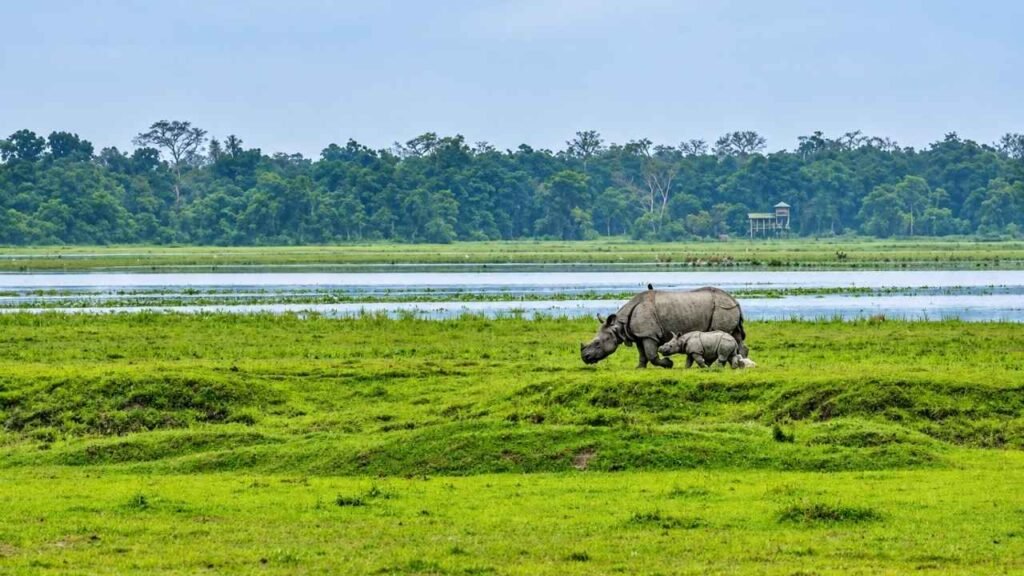
Kaziranga National Park is one of the most wonderful wildlife destinations in Assam and a must-visit place for anyone visiting Northeast India. Kaziranga, Assam, is famous for its population of greater one-horned rhinoceroses, but it is also home to elephants, wild water buffaloes, swamp deer, tigers and hundreds of bird species. Its unique landscape of tall grasslands, wetlands, forests and waterways means that every safari is different.
Kaziranga is not just a place to see wildlife; it was awarded UNESCO World Heritage Site status in 1985. It is a significant conservation landscape of the Brahmaputra River, seasonal floodplains, and varied habitats. If you’re after a short wildlife holiday or want to add Kaziranga to a larger itinerary in Assam, this complete travel guide will cover the best time to visit, things to do, safari options, how to reach, where to stay, and useful travel tips.
Why visit Kaziranga National Park?
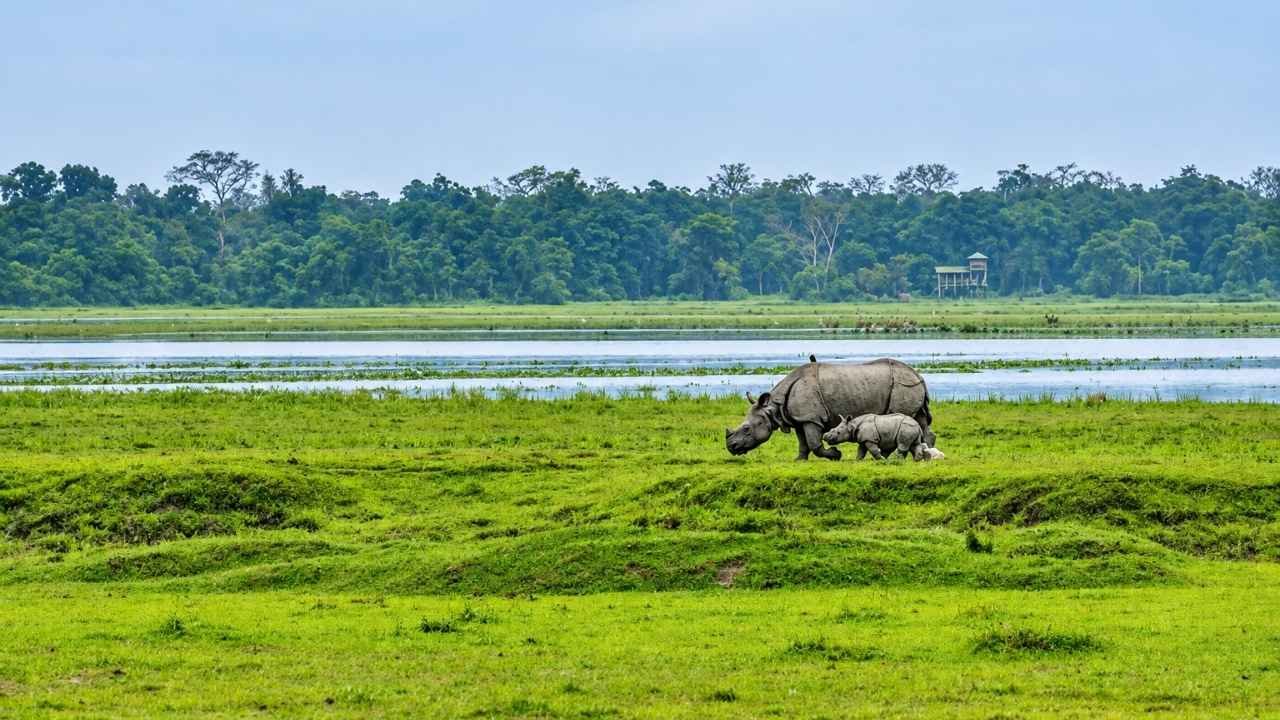
Kaziranga’s biggest attraction is undoubtedly the greater one-horned rhinoceros. The park is seen as one of the world’s most important strongholds for the species and has been a major force in its conservation. The park also supports significant populations of tigers, Asian elephants, wild water buffaloes, swamp deer and several other mammals.
Kaziranga is equally interesting for birdwatchers. Its wetlands and grasslands are home to resident and migratory birds, and the surrounding forests are home to a variety of other wildlife. The scenery makes the experience. The scenery is lovely in the cooler months with tall elephant grass, shallow wetlands, wooded patches, and hills in the distance.
Best Things to Do in Kaziranga
- Take a Jeep Safari
One of the most popular ways to explore Kaziranga is through a jeep safari. It allows visitors to traverse various habitats and to see many more miles than they could on foot. Kohora (Central), Bagori (Western), Agoratoli (Eastern), and Burapahar (Western Hills) are the four main safari ranges in Kaziranga. Each offers a different landscape and wildlife experience. Kohora is popular for its varied wildlife, Bagori is well known for rhinos and wetlands, while Agoratoli is particularly interesting for birdwatching and wildlife enthusiasts. Wildlife sightings can never be guaranteed, so it is best to approach a safari as an opportunity to observe animals in their natural habitat rather than as a checklist.
2. Experience an Elephant Safari
Elephant safaris provide a different perspective of the grasslands of Kaziranga and are traditionally used for early morning wildlife viewing. They can get close views of rhinos and other animals, where elephants can push through the vegetation more easily.
Availability, routes and timings may be subject to change, and travellers should check the latest arrangements when making their booking. Older published information should not be treated as a guarantee of current safari operations or prices.
3. Explore Kakochang Waterfalls
Kakochang Waterfalls, also known as Kaipholangsho Waterfalls, is a popular excursion from the Kaziranga area. The waterfall is situated near Bokakhat, in green, forested areas, and tea plantations. The waterfall is reached on foot and is a nice add-on for those who want some activity other than wildlife safaris. The surrounding scenery also offers good opportunities for photography.
4. Tea Plantations of Assam
Kaziranga is surrounded by the beautiful landscapes of Assam, including tea-growing areas. The tea gardens afford travellers a chance to savour the region’s agricultural heritage amid the neatly laid rows of tea bushes. A more varied holiday experience can be achieved by combining a wildlife safari with the tea landscapes of Assam, for many visitors.
5. Explore the National Orchid and Biodiversity Park
The National Orchid and Biodiversity Park is another attraction in the Kaziranga region. It features orchids and other plants and offers insight into the region’s biodiversity and cultural traditions. Visitors may also find cultural performances and displays with some aspects of Assamese heritage, as per schedule.
Wildlife at Kaziranga You Can See
Assam Kaziranga National Park is particularly famous for its greater one-horned rhinoceros, but visitors can also spot elephants, wild water buffaloes, swamp deer and, with luck, the Royal Bengal tiger.
Wildlife | What to Know |
One-horned rhinoceros | Kaziranga’s most famous animal and a major conservation success. |
Asian elephant | Commonly associated with the park’s grasslands and forests. |
Wild water buffalo | One of the important large herbivores found here. |
Swamp deer | A notable species of Kaziranga’s wetland and grassland ecosystem. |
Royal Bengal tiger | Present in the park but elusive and difficult to spot. |
Birds | More than 450 species have been recorded, including migratory birds. |
Birds and aquatic wildlife depend especially on wetlands and the park’s floodplain ecosystem. UNESCO notes that Kaziranga is an important habitat for many globally threatened species. Wildlife sightings depend on the season, weather, animal movement, and luck. Experienced guides cannot guarantee you will see any particular species.
When to Visit Kaziranga
November to April is generally the best time for a normal Kaziranga wildlife tour. Assam Tourism recommends that the best time to visit is November to April, with late February to early April being quite good for sightseeing.
- Nov to Feb: The weather in these months is cooler, and safari conditions are comfortable. Light woollens come in handy as it can get cold in the early mornings.
- March to April: The temperature gradually increases, but the weather might still be favourable for wildlife excursions. The landscape gets more colourful with the unfolding of spring.
- May to October: The monsoon brings heavy rain and flooding, which badly affect Kaziranga. Annual flooding is an important natural ecological process of the park but affects tourism operations and accessibility. Always check their official opening status, especially during the transition months, before making travel plans.
How to Get to Kaziranga
- By plane
The nearest airport options include Jorhat Airport and Tezpur Airport, while Lokpriya Gopinath Bordoloi International Airport in Guwahati is the major gateway for many travellers. From Guwahati, Kaziranga can be reached by road, and Assam Tourism lists the distance at approximately 217 km.
2. Driving
One of the most convenient ways to reach Kaziranga is by road, especially when it is part of an Assam road trip. From Guwahati, you can take buses and taxis. Private vehicles and hired cars are more flexible.
3. By Rail
Rail travellers can use local railway stations and travel by road to their chosen accommodation or park range. Depending on your city of origin and availability of trains, the most convenient option can vary.
Accommodation in Kaziranga
The majority of travellers stay in accommodation around Kohora, which gives convenient access to the Central Range and a range of hotels, resorts, lodges and homestays. Or you could also stay around Bagori or other areas depending on your planned safari range and itinerary. When choosing a resort in Kaziranga Assam, consider its distance from your preferred safari range, the facilities available, and whether it can assist with arranging local transport and safari bookings. Booking ahead is recommended during the peak wildlife season, especially around holidays and weekends.
How many days are sufficient for Kaziranga?
If you’re visiting for the first time, and your main interest is wildlife and safari experiences, a 2-night/3-day trip is generally enough.
A simple itinerary might be:
- Day 1: Arrive at Kaziranga, check into the hotel, and enjoy an evening cultural or local experience.
- Day 2: Early morning safari, leisure time in the afternoon, and nearby attraction exploration (tea garden, National Orchid and Biodiversity Park, etc.)
- Day 3: Another safari or visit to the Kakochang Waterfalls before proceeding.
If you are interested in birdwatching, photography, or combining Kaziranga with places like Majuli, Nameri, or Guwahati, consider extending your stay.
Travel Tips for Kaziranga
Pack comfortable clothing for outdoor activities and early morning safaris. You might want to wear a light jacket on those cold winter mornings, but as the temperature rises, breathable clothing is your best bet.
Binoculars, especially for birdwatching, are highly recommended. A good zoom lens on a camera can also make wildlife photography more exciting. For jeep safaris in the dry season, take a scarf or mask; the roads can get dusty. Sturdy footwear is useful if you are planning to visit places like Kakochang Waterfalls.
Most importantly, obey park rules. Do not feed animals, make loud noises, or try to attract wildlife for photographs. An important part of responsible wildlife tourism is keeping your distance and respecting the natural behaviour of the animals. Safari prices, entry charges, operating zones and timings are subject to change. Before you travel, review the latest information from the relevant authorities or authorised booking channels.
Plan Your Kaziranga Wildlife Escape
A visit to Assam Kaziranga Park can be a memorable addition to a Northeast India holiday, particularly for travellers interested in wildlife, nature and outdoor experiences. Kaziranga is far more than just a place to see a one-horned rhinoceros. Its floodplain grasslands, wetlands, forests, and rich wildlife make it one of Assam’s most unique natural landscapes. From jeep safaris, birdwatching, tea gardens, waterfalls, and cultural experiences, there is much to put into a well-planned itinerary.
If you want the most convenient wildlife experience, visit during the main tourism season, book your safari in advance, and allow enough time to explore without rushing. If you are travelling with family, friends or as a couple, Kaziranga can be a memorable addition to a Northeast India holiday.
What is Kaziranga National Park famous for?
Kaziranga is famous for the great one-horned rhinoceros population. It also has tigers, elephants, wild water buffalo, swamp deer, and a number of bird species.
How many days are enough for Kaziranga?
Two nights and three days is generally suitable for a first-time visit with a focus on safaris. Wildlife and birdwatching enthusiasts may want to linger longer.
When is the best time to visit Kaziranga?
The best time to visit Kaziranga is generally considered to be from November to April. This period is particularly recommended by Assam Tourism. Sightseeing is said to be good from late February to early April.
Will I see a tiger in Kaziranga?
Yes, Kaziranga has tigers, but tiger sightings are not certain. A safari allows you to see one in its natural habitat, but no sighting is guaranteed.
Is Kaziranga suitable for a family trip?
Yes. Kaziranga can form part of a family holiday, especially if the itinerary has enough time for rest between safaris. Families should follow all park safety instructions and wildlife viewing regulations.